2024 Tesla Model 3 Review Australia
The 2024 Tesla Model 3 is one of Australia's most popular electric sedans, offering impressive range, technology and performance.
Pros
- ✅ Refined ride quality compared with the earlier Model 3
- ✅ Quiet, modern and spacious cabin
- ✅ Strong performance even in the entry version
- ✅ Excellent energy efficiency
- ✅ Useful Tesla Supercharger integration
- ✅ Large boot plus front storage compartment
- ✅ Regular over-the-air software updates
- ✅ High standard safety equipment
- ✅ Improved interior materials and seat comfort
- ✅ Low routine servicing requirements
Cons
- ⚠️ Almost every function is controlled through the touchscreen
- ⚠️ No traditional indicator stalk on the updated model
- ⚠️ Rear visibility is only average
- ⚠️ Firm low-profile tyres can be expensive to replace
- ⚠️ Insurance can cost more than expected
- ⚠️ No Apple CarPlay or Android Auto
- ⚠️ Glass roof can make the cabin warm in strong Australian sun
- ⚠️ Some drivers may dislike the minimalist interior
- ⚠️ Public charging costs vary considerably
- ⚠️ Repair times may be longer outside major cities

## 2024 Tesla Model 3 overview
The 2024 Tesla Model 3 is one of the most important electric cars available in Australia. It helped make battery-electric motoring feel realistic for ordinary drivers by combining useful driving range, rapid acceleration, a spacious cabin and access to Tesla’s charging network. For 2024, the Model 3 received a major update commonly known as the “Highland” facelift. Although the basic platform remained familiar, Tesla revised the exterior, interior, suspension, seats, sound insulation and technology.
These changes matter because the earlier Model 3 was already quick and efficient but could feel firm, noisy and slightly unfinished on rough Australian roads. The updated car is more polished. It rides with greater control, produces less tyre and wind noise, and presents a noticeably more upmarket cabin. It remains unconventional, however. Most functions are operated through the central touchscreen, and the updated model removes the traditional indicator stalk. Buyers should test-drive the car carefully to decide whether that control layout feels natural.
For MyCarMarket Australia shoppers, the Model 3 makes the most sense as an efficient daily car for people who can charge at home. It can also handle interstate travel, especially on routes covered by reliable high-speed charging. The strongest arguments in its favour are performance, efficiency, low routine maintenance and technology. The main reservations involve the screen-heavy interface, insurance, tyre costs and the need to plan charging if home charging is unavailable.
## Exterior design
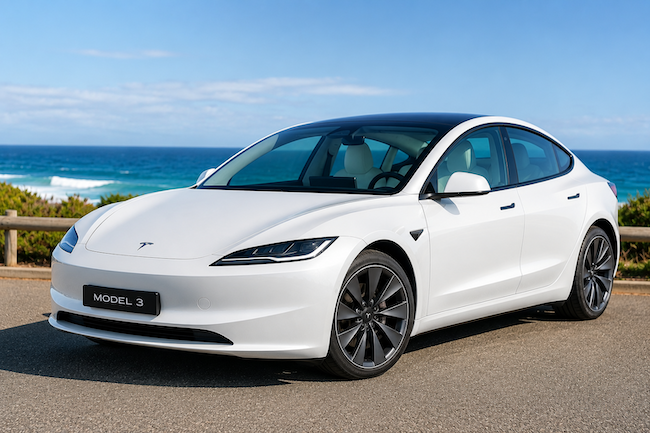
The 2024 update gives the Model 3 a cleaner and more mature appearance. The slimmer headlights, reshaped front bumper and smoother surfaces reduce visual clutter. At the rear, the revised lights are integrated into the boot lid, helping the car look wider and more cohesive. It is still recognisably a Model 3, but the new design appears less rounded and more purposeful than the earlier version.
Aerodynamics are central to the design. The low nose, flush door handles, smooth underbody and carefully shaped wheels help reduce energy consumption at motorway speeds. That efficiency contributes directly to real-world range. The trade-off is a relatively low seating position and modest ground clearance, so drivers should take care around steep driveways, wheel stops and rough rural tracks.
Wheel choice affects comfort, efficiency and replacement cost. Wheel choice affects comfort, efficiency and replacement cost. Smaller wheels with taller tyre sidewalls generally provide the best ride and range, while larger wheels look sportier but may transmit more impact harshness and cost more when tyres need replacement. For most Australian commuters, the standard wheel package is the sensible choice.
## Interior and technology
The Model 3 interior is intentionally minimalist. There is no conventional instrument cluster in front of the driver. Speed, navigation, energy use, climate controls, audio, phone functions and vehicle settings appear on the large central touchscreen. The interface is responsive and visually clear, and regular software updates can add features or refine existing functions.
The updated dashboard uses improved materials and cleaner trim. Ambient lighting adds visual interest at night, while better insulation makes the cabin noticeably quieter. The front seats are supportive and comfortable for long trips, and ventilation is a valuable feature during hot Australian summers. Rear passengers also benefit from a small display that can control climate and entertainment functions.
Storage is excellent. The centre console has deep covered compartments, there are useful door bins, and the flat floor improves foot space. The glass roof creates an airy atmosphere, although it can allow heat into the cabin when the car is parked in direct sunlight. A quality sunshade may be worthwhile for owners in warmer regions.
Tesla does not provide Apple CarPlay or Android Auto. The built-in system includes navigation, media streaming, Bluetooth and charging-route planning, but drivers who rely heavily on smartphone mirroring may find the omission frustrating. The navigation system is particularly useful in an EV because it can include charging stops and estimate remaining battery level at the destination.
## Controls and everyday usability
The most controversial change is the removal of the traditional indicator stalk. Indicators are operated by buttons on the steering wheel. They can work well once the driver is familiar with them, but roundabouts and rapid steering movements may make the buttons harder to locate. Gear selection is also primarily handled through the touchscreen, with backup controls available.
Almost every adjustment requires interaction with the screen. The temperature and fan settings are easy to access, but moving air vents, adjusting mirrors or opening some menus can take more attention than using physical controls. Voice commands reduce the need to touch the display, yet the system still asks the driver to adopt Tesla’s way of doing things.
The phone app is one of the best ownership features. It can act as the key, show charging progress, pre-condition the cabin, locate the car and control locks. Pre-cooling the cabin before entering is especially useful in summer, and pre-heating can improve comfort and efficiency on cold mornings.
## Performance and driving experience
Even the less powerful Model 3 versions feel quick in normal traffic because electric motors deliver immediate torque. Acceleration is smooth, quiet and effortless. Overtaking requires little planning, and city gaps are easy to manage without revving an engine or waiting for a transmission to change gear.
Performance versions are dramatically faster, but their capability is more than most drivers need. The regular rear-wheel-drive and long-range versions provide ample speed for commuting and touring while generally offering better value, comfort and tyre life. Buyers should consider whether they genuinely need the fastest model before accepting the higher purchase price, firmer setup and increased running costs.
The 2024 suspension revisions are a major improvement. The car absorbs broken surfaces with less sharpness and settles more quickly after larger bumps. The car absorbs broken surfaces with less sharpness and settles more quickly after larger bumps. Steering remains accurate and direct, while the low-mounted battery keeps the centre of gravity low. The Model 3 changes direction confidently and feels stable through sweeping corners.
It is not a lightweight sports sedan, and its steering provides limited road feedback, but the instant response and balanced chassis make it enjoyable. Regenerative braking slows the car when the accelerator is released and returns energy to the battery. Most owners adapt quickly and begin completing everyday journeys with minimal use of the brake pedal.
## Range and energy efficiency
Range depends on the specific version, wheel size, temperature, speed, traffic, elevation and climate-control use. Tesla’s official figures are useful for comparing variants, but Australian owners should expect real-world results to vary. Urban driving can be very efficient because regenerative braking recovers energy, while sustained motorway speeds consume more power.
The Model 3 is one of the more efficient electric vehicles in its class. Its aerodynamic body, efficient motors and battery management allow it to travel farther on each kilowatt-hour than many larger electric SUVs. This improves both range and charging cost. Drivers should avoid treating the official maximum as a guaranteed distance. A sensible touring plan includes a buffer, particularly in remote areas or during poor weather. Headwinds, heavy rain, cold conditions and high speeds can reduce range. The car’s navigation system helps by estimating arrival charge and recommending charging stops.
## Charging in Australia
Home charging provides the easiest ownership experience. A dedicated wall charger can replenish the battery overnight, allowing the driver to begin most mornings with the desired charge level. People who travel modest daily distances may also manage with a standard household outlet, although charging is much slower and the electrical installation should be checked for safe continuous use.
On long trips, Tesla Superchargers and compatible public DC chargers can add substantial range during a meal or rest stop. Charging speed is fastest when the battery is warm and at a lower state of charge, then gradually slows as it fills. For this reason, several shorter charging stops may be faster than waiting for one session to reach 100 per cent.
Tesla’s navigation system automatically prepares the battery before arriving at many fast chargers, allowing the vehicle to accept higher charging speeds. This helps reduce waiting time and improves the overall touring experience. Owners who regularly travel long distances should still plan their journeys carefully, particularly in remote parts of Australia where charging infrastructure is less common. ## Ride Comfort
One of the biggest improvements in the 2024 Tesla Model 3 is its ride quality. Earlier versions could feel firm over broken Australian roads, transmitting sharp impacts into the cabin. The updated suspension provides a much more compliant driving experience while maintaining excellent body control.
Around town, potholes, expansion joints and speed humps are absorbed with greater refinement. The suspension no longer feels unsettled after larger bumps, making daily commuting noticeably more comfortable. On country roads the Model 3 remains composed, with less vertical movement and improved stability at highway speeds.
Additional sound insulation also makes a significant difference. Wind noise has been reduced, tyre roar is less intrusive and overall cabin refinement is much closer to premium European sedans. Conversations between passengers are easier at motorway speeds, while music and phone calls sound clearer because of the quieter cabin environment.
Drivers choosing smaller wheels will generally experience the best ride comfort. Larger alloy wheels improve appearance but may introduce additional road noise and firmer impacts on rough surfaces. Buyers should consider where they drive most often before selecting optional wheel packages.
## Interior Space and Practicality
Despite its sleek exterior styling, the Tesla Model 3 offers impressive interior space. The absence of a traditional transmission tunnel creates a flat floor that improves legroom for both front and rear passengers.
The front seats provide excellent support during long journeys, while the updated seat cushioning increases overall comfort. Rear passengers have sufficient headroom and knee room for most adults, although taller occupants may notice the sloping roofline compared with larger SUVs.
Storage is another strength. The rear boot provides generous luggage capacity, while the additional front storage compartment (frunk) offers extra space for charging cables, shopping bags or smaller travel items. Combined with under-floor storage in the rear boot, the Model 3 can easily accommodate everyday family needs or weekend road trips. The low seating position contributes to the car's sporty feel but may require some adjustment for drivers moving from SUVs or dual-cab utes. Once seated, visibility forward is excellent thanks to the expansive windscreen. Rear visibility is more limited because of the sloping roofline, although reversing cameras and parking sensors help make parking straightforward.
## Safety
Safety remains one of the Tesla Model 3's strongest selling points. The vehicle includes a comprehensive suite of active safety technologies designed to help prevent accidents before they occur.
Features include Autonomous Emergency Braking, Lane Keeping Assist, Blind Spot Monitoring, Adaptive Cruise Control, Traffic-Aware Cruise Control, Driver Attention Monitoring, multiple airbags, Electronic Stability Control and a comprehensive camera-based safety system.
The rigid battery structure also contributes to occupant protection by lowering the centre of gravity and increasing structural strength. The low rollover risk provides additional confidence during emergency manoeuvres.
Visibility from the large windscreen is excellent, while the camera system provides a clear view around the vehicle during parking and low-speed manoeuvres. Regular software updates also allow Tesla to improve certain safety features throughout the ownership period without requiring dealership visits.
## Reliability and Ownership
Electric vehicles generally require less routine maintenance than petrol or diesel cars because they contain fewer moving mechanical components. There are no engine oil changes, spark plugs, timing belts or traditional automatic transmissions requiring regular servicing.
However, owners should not assume running costs are zero. Tyres can wear more quickly due to the vehicle's instant torque and overall weight. Insurance premiums may also be higher than some comparable petrol sedans depending on location, driver history and insurer.
Battery durability has generally proven strong, although long-term battery health depends on charging habits, climate and usage. Most owners can help maximise battery longevity by avoiding unnecessary frequent charging to 100 per cent unless additional range is genuinely required. Tesla recommends following sensible charging practices rather than worrying excessively about battery degradation. Keeping the battery within normal operating ranges, using scheduled charging and avoiding leaving the battery at very high or very low charge levels for extended periods can all contribute to long-term health.
Software support remains one of Tesla's biggest ownership advantages. Over-the-air updates regularly introduce new features, improve efficiency, refine vehicle systems and occasionally enhance performance without requiring a visit to a service centre. Few manufacturers currently offer software support as comprehensive as Tesla.
## Running Costs
One of the biggest attractions of the Tesla Model 3 is its low day-to-day operating cost. Charging at home during off-peak electricity periods can be significantly cheaper than filling a petrol vehicle with fuel. Drivers covering high annual kilometres may see considerable savings over several years of ownership.
Routine servicing requirements are minimal compared with conventional internal combustion vehicles. Brake wear is often reduced because regenerative braking handles much of the vehicle's deceleration during normal driving.
Owners should still budget for replacement tyres, insurance, registration and occasional maintenance items such as cabin air filters and brake fluid inspections. Premium tyres designed for electric vehicles may cost more than those fitted to smaller petrol sedans.
## Practicality for Australian Buyers
For most Australian households, the Model 3 comfortably fulfils the role of an everyday family car. School runs, commuting, shopping and weekend travel are handled with ease, especially when home charging is available.
Drivers living in apartments or rental accommodation without dedicated charging should carefully consider how they will recharge the vehicle before purchasing. Public charging continues to expand throughout Australia, but home charging remains the most convenient and cost-effective solution.
The Model 3 performs particularly well in metropolitan areas where charging infrastructure is more established. Regional touring is increasingly practical thanks to Tesla's expanding Supercharger network and additional third-party fast-charging providers. ## Technology and Connectivity
Tesla continues to lead the industry in software integration and connected vehicle technology. The large central touchscreen controls almost every vehicle function, from navigation and entertainment to climate control and charging information. The system is responsive, visually clean and receives regular over-the-air updates that introduce new features and improve existing functionality.
Built-in navigation is specifically designed for electric vehicle ownership. It automatically calculates charging stops on longer journeys, estimates battery percentage on arrival and can pre-condition the battery before reaching compatible fast chargers to maximise charging performance.
Although Apple CarPlay and Android Auto are not available, Tesla's own software ecosystem provides Bluetooth connectivity, streaming services, voice commands and detailed vehicle information. Owners who are comfortable with Tesla's interface are unlikely to miss smartphone mirroring, while others may consider its absence a disadvantage.
The Tesla mobile app further enhances convenience by allowing owners to lock or unlock the vehicle, monitor charging progress, pre-condition the cabin, locate the car and receive software update notifications remotely.
## Final Verdict
The 2024 Tesla Model 3 remains one of Australia's benchmark electric vehicles. It successfully combines impressive efficiency, strong performance, outstanding technology and low day-to-day operating costs into a practical family sedan.
The Highland update addresses many criticisms of the earlier model by delivering a quieter cabin, more comfortable ride, higher-quality interior materials and improved overall refinement. While the touchscreen-focused controls and lack of Apple CarPlay or Android Auto may not appeal to everyone, they are unlikely to outweigh the Model 3's many strengths for most buyers.
For drivers with reliable home charging, the Model 3 offers an ownership experience that is both enjoyable and economical. It is particularly well suited to commuters, families and business users seeking low operating costs without compromising performance or safety.
Overall, the 2024 Tesla Model 3 continues to justify its reputation as one of the best electric sedans available in Australia. It earns a strong recommendation from MyCarMarket Australia for buyers looking to transition from petrol to electric motoring.
Frequently Asked Questions
Q: Is the 2024 Tesla Model 3 a good car for Australian families?
A: Yes. It has seating for five, a useful rear seat, a large boot, underfloor storage and a front storage compartment. Families needing easier access or more vertical cargo space may prefer an electric SUV.
Q: How far can the Tesla Model 3 travel on one charge?
A: Range varies by version, wheels, speed, weather and driving style. Official figures are best used for comparison. Real-world drivers should retain a safety buffer, especially on regional trips.
Q: Can I charge a Model 3 from a normal power point?
A: It can be charged from a suitable household outlet using approved equipment, but charging is slow. A professionally installed wall charger provides a faster and more convenient solution.
Q: Does the Tesla Model 3 have Apple CarPlay or Android Auto?
A: No. Tesla uses its own infotainment, navigation, phone and media system. Bluetooth connectivity is available, but conventional smartphone mirroring is not included.
Q: Is the 2024 Model 3 comfortable on rough roads?
A: It is more comfortable and quieter than the earlier Model 3. Smaller wheels generally provide the best ride, while larger performance wheels may feel firmer on damaged surfaces.
Q: Is a Tesla Model 3 expensive to maintain?
A: Routine maintenance is usually limited compared with a petrol car, but tyres, insurance and collision repairs can be costly. Buyers should obtain insurance quotes and budget for quality replacement tyres.
Q: Should I buy the rear-wheel-drive or long-range Model 3?
A: The rear-wheel-drive version is suitable for many commuters and usually offers strong value. The long-range version is better for frequent touring, drivers without daily charging access or buyers wanting stronger performance.
Q: What should I check when buying a used Model 3?
A: Inspect tyres, wheels, paint, panel alignment, suspension, charging operation, cameras, screens and seat functions. Confirm accident history, remaining warranties and whether all included charging equipment is present.